Blog

Return to Oberlin College

“Doesn’t it feel as though we were here yesterday?” I whisper to Nick, reaching for his hand.

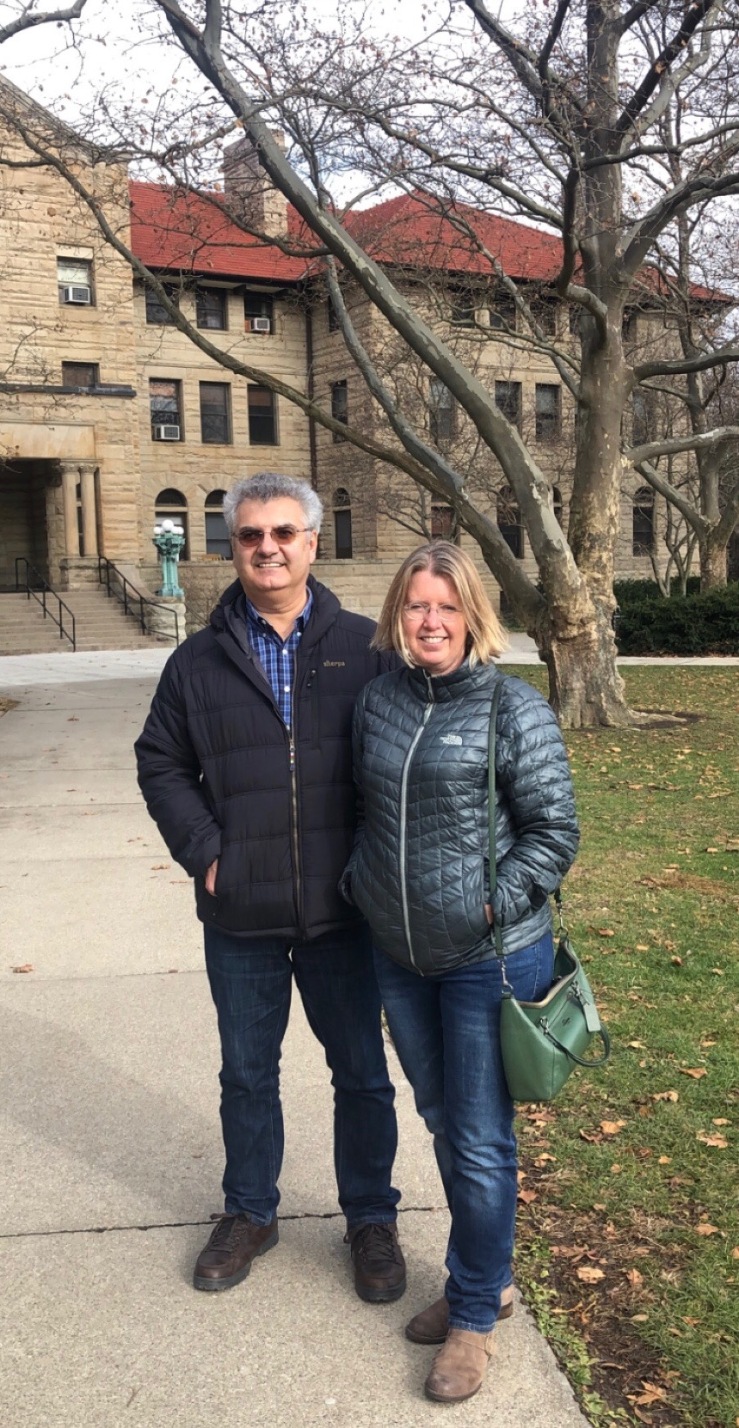
We walk along the crisscrossed paths on the campus of Oberlin College, alongside red bricked buildings, among students carrying backpacks, on their way to the last of their lectures before school lets out for the Thanksgiving break.  It was once our college, the one we both graduated from, thirty years ago.

Nothing has changed.

The large oak trees on Tappan Square shed rust colored leaves. The art building and museum stand on the corner, where I spent so many hours studying art history. Peters Hall, with its towers and domed planetarium, still resembles the setting for a Harry Potter book.  The main library, affectionately called Mudd, looks out over Wilder Bowl, with its study cubicles and “moon” chairs, whose floors get progressively quieter the higher one goes. The students, in their distinct Obie attire and attitude – blue hair, alternative clothing, vegan diets – ready to take on the world from an unconventional perspective, to challenge the status quo, to advocate for the underdog.

On the other hand, everything has changed.

Yanni, our son, already in his second year of college, approaches us from the science complex, a new building, built upon the footing of its predecessor.  He wears an Oberlin sweatshirt and a wide grin.  My heart skips a beat.  He reminds me of his father, so many years ago, who used to find me after class, to go to Dascomb for lunch or to the student union for a cup of coffee.

When did time slip by us so quickly?  Have the best of our years gone by?

“Mom, come sit in on my physics class!  The lecture is on Einstein and his theory of relativity.”

I smile at his eagerness and finally agree. As long as he doesn’t ask me to come to linear algebra next!

For the past day, he has hauled us – his dad, his younger sister, and me – all over the campus. To his lecture halls and the laboratory that he is conducting research in.  He introduced us to his professors and sought out the advisor in the chemistry department who helped him choose his courses, the same advisor that Nick had been assigned to so many years ago.  He dragged us through the athletic complex where he works out in the evenings and to the dining hall where the food is “marginal”. He proudly shows us his tiny dorm room, in German House, more the size of a closet than a room.

My college, through his eyes. A second generation that has come full circle.
Oberlin2

I want to tell him exactly how it was back then, when his father and I walked the same pathways. This college was our anchor as well as our springboard. We absorbed the teachings etched into the walls of the academic buildings – King and Severance and Kettering.  They promised us a life beyond, a solid footing, the groundwork for our future. I want to tell him to let it all permeate, to learn as much as he possibly can, to cherish the opportunity given.  I want him to understand that this college afforded his father a way out of an underprivileged life, one in which he had to wash dishes to contribute to his family’s meagre income.  I want him to know what this college did for me, newly arrived from Germany, opening my eyes to a whole new country, different customs, a new vista.  It was here that his father and I met, where we saw the unfolding of our life together.


I remain silent, however, reigning in my emotion, proud and thick in my throat.  The best, far from being over, I realize, is yet to come.

It is his time now, not mine.
 

South to Seattle

Flying south from Alaska, Seattle catches me off-guard. Again.

In an instant, I am part of a bustling humanity again, a type that the north seems to exist apart from. In the big city, with its cars and pedestrians and high-rise buildings, an energy abounds that I forget exists when I am settled in the slower pace of Alaska.

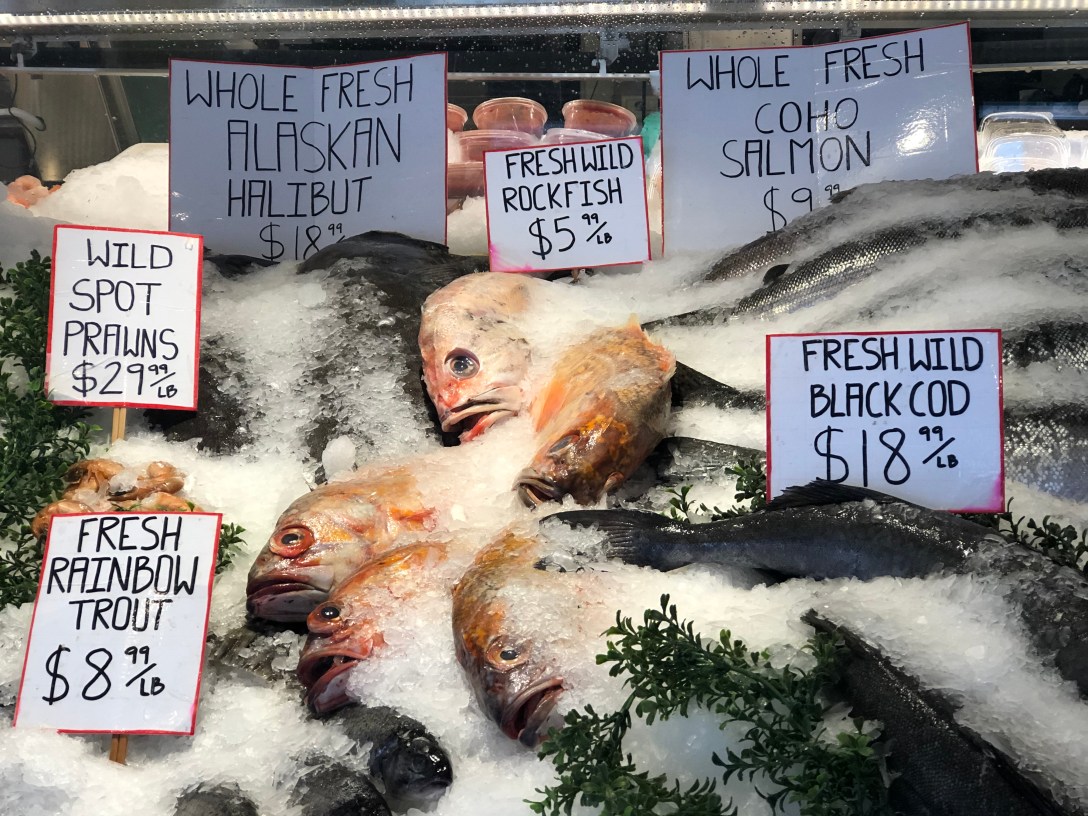
The pace is invigorating. The sound of traffic constant. Streets are lined with stores of all types: fashion at Macys and contemporary furniture at Roche Bobois and white chocolate mochas at Starbucks. At the Art Museum, an exhibition entitled “Flesh and Blood” promises the shadowy chiaroscuro style of Italian Baroque masterpieces. The Symphony lures with a Christmas concert by three Canadian tenors. And, everywhere, people. Darting in and out of shops, skirting street musicians, waiting in clusters at street crossings. At Pike’s Market, I sidestep the crowd, watch fish mongers throw salmon at each other across ice displays, mostly for the benefit of photo-taking tourists.  Coho salmon, Alaskan halibut, wild spot prawns.  I have to smile. Had I brought Alaska south with me?

In the late afternoon, we go to Sneaker City, some blocks distant. The store is run by two Asian women.  The younger woman takes her pug out onto the sidewalk to pee while we scan the shoes on the racks. Her mother straightens up the store around us, yawning. It is close to closing time. Nick deliberates between Saucony and Nike.  When he finally decides, the older woman packs the shoes into a bag, discarding the shoe box. On the walk back to the hotel, we stop to peer at store window displays. A wine store displays bottles wearing Santa Claus hats. Zwilling knives gleam in a cutlery store. In the German deli grocery store, salamis and Black Forest ham and Löwensenf mustard remind me nostalgically of my childhood.

When darkness falls, we venture to the Steelhead Diner. The restaurant is filled, the scents aromatic. I am wedged in tightly between two other tables. I feel like I am practically sitting on my neighbor’s lap.  I try to politely avert my gaze, not wanting to eavesdrop on their conversation. I settle to people watch.  Trendy attire, long boots, form fitting jackets.  I glance down at my jeans and sweater, feeling, all of a sudden, distinctly Alaskan.  Afterwards, walking back to the hotel, I notice the homeless, huddled, leaning against buildings. Caught in the excitement of the day, I had not seen them earlier. I pull my jacket closer, feeling the wet cold brought in from the ocean.

FerrisWheel

In our hotel room, we open the shoe box to see that the lady, inadvertently, has packed us the wrong shoes.  Should we return for an exchange?  We ponder for a moment, then let it go.  The day has been long. I feel frayed. I walk onto the outdoor patio, where gas-lit firepits ward off the chill.  No one is there. The market vendors have crated their produce, covered their crafts, shuttered their stands. Ferries have stopped. I sit, huddled into my fleece, and look out onto the bay. The Ferris wheel on the waterfront has been stilled for the night, but its lights cast a glow onto the dark water.

As much as I enjoyed the lively, whirling day, I exhale. It is quiet, finally.

Snow Balloons

On a Sunday afternoon after the first significant snowfall in Fairbanks, the landscape is blanketed smooth and white.  The sunlight slants sideways, casting the spruces into a golden glow, a pristine world.

I try to animate my family.  “Let’s go for a ski!”

They glance up at me from the couch and armchair where they recline, books in hand. Even though it is noon, they lounge, Helen in pajamas, Nick still unshaven.

“I don’t have any ski pants,” is Helen’s excuse.

“I want to finish the article I’m reading,” Nick comments.

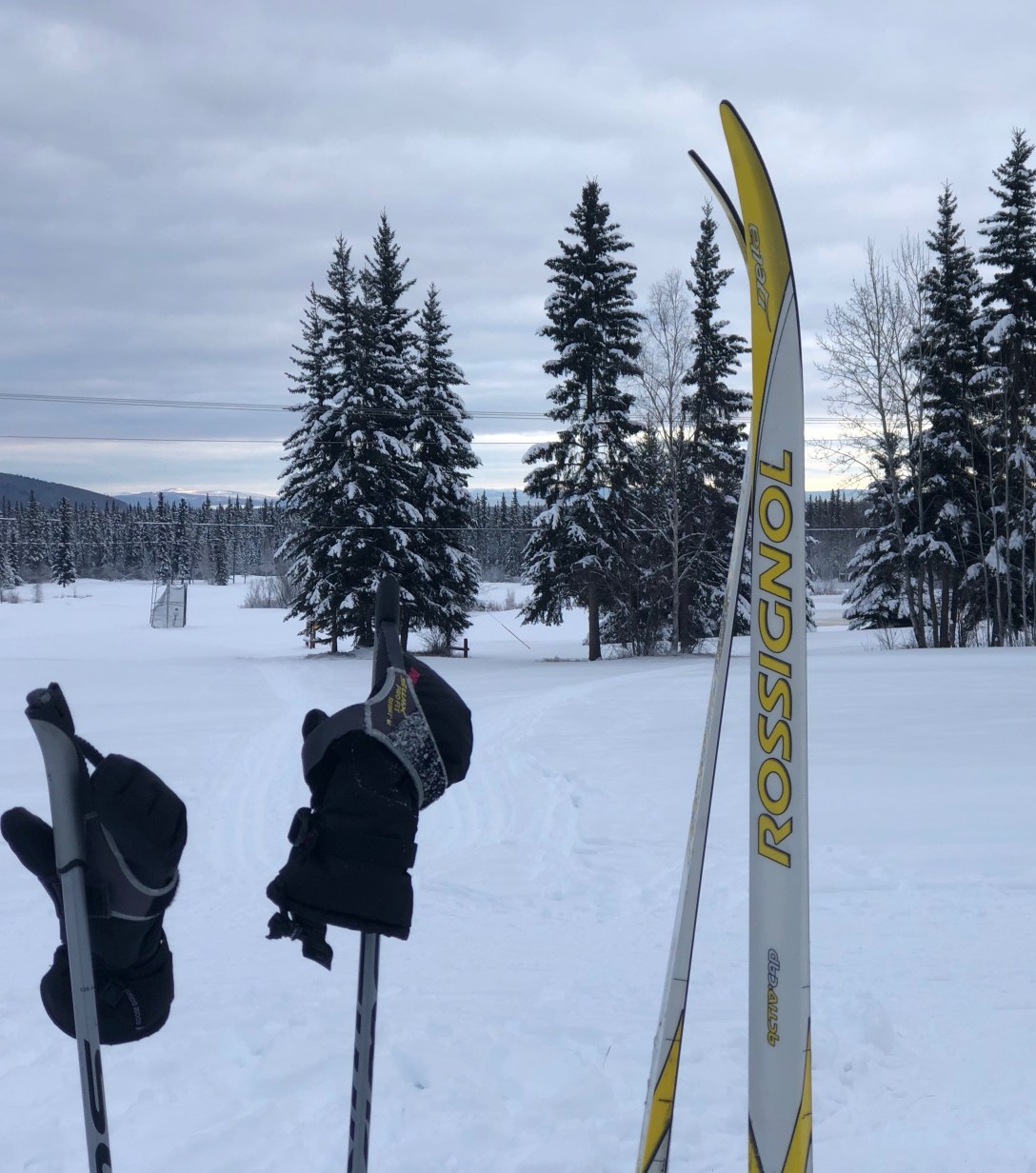
I tell them I would assemble what we need for the excursion.  I would find appropriate clothing, apply wax to the cross-country skis, gather poles into the trunk of the car.  We are so lucky to live in Alaska, I tell them, where snowfall and skiing are always guaranteed.  Even the US National Ski Team takes advantage of this, traveling to Alaska early, where they can begin their training much earlier than anywhere in the lower 48 states.  They grunt back at me before they finally concede.

Of course, given the fact that we have not used the equipment since last winter, our preparations take some time.  Helen grumbles that the ski pants she borrows from me are too big.  Nick’s second pair, which I borrow, in turn, from him, are equally large on me.  After we pull tight the drawstrings at our waists, we both look like balloons.

“Never mind,” I tell my fashion-conscious teenager.  “There will only be moose out there to see us!”

Nick, when we arrive at the trails, realizes he has left his hat in the garage at home.  I produce a bright baby-blue headband from the compartment in the car, which I hand him with grin.  He looks at me in dismay but pulls it over his ears anyway.

Finally, even though not exactly trend setting in attire, we are off.  Helen chooses the wider trail to skate ski.  Nick and I follow each other along a narrower, parallel track which is perfect for classical skiing.  Just as I try to tell myself that skiing is like bike riding, once learned. forever engrained, I turn to see Helen, arms flailing, lose her balance.  She lands gracefully.  I, however, head turned, chuckling, run smack into Nick. He had been plowing ahead steadily, like a tractor in first gear, but had chosen that precise moment to slow down in front of me. I land in the deep snow, from which I try to extract myself, skis crossed, poles jutting.  I heave myself back up, dignity bruised, much less elegant in manner.

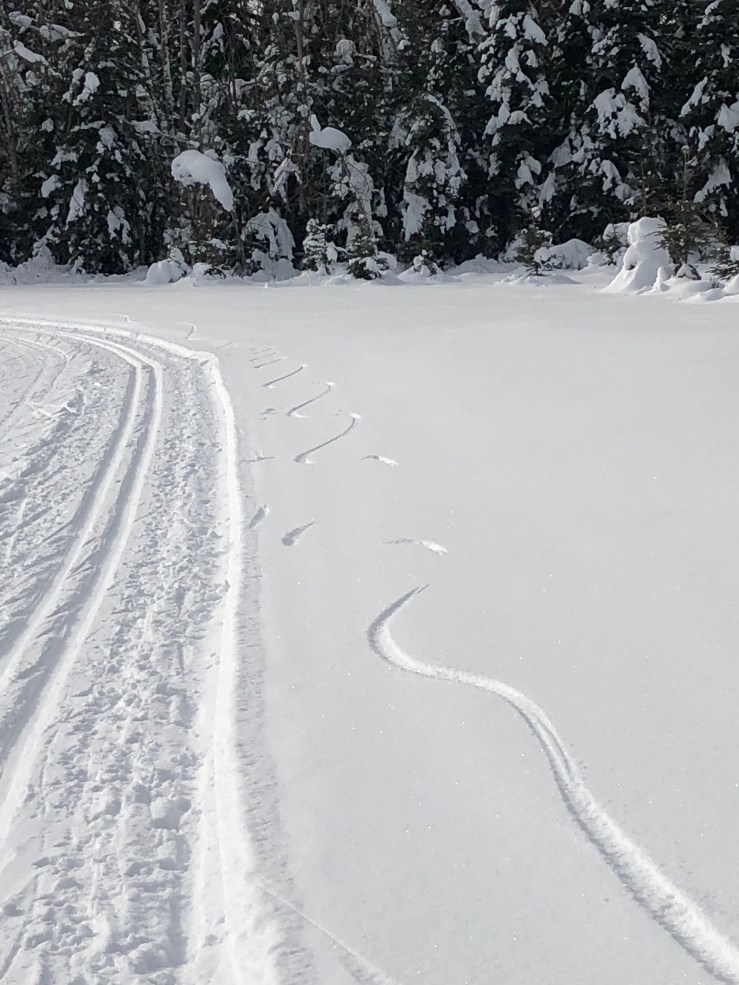
When we collectively find our ski legs again, the loop trail beckons. The skis hiss as they glide over the packed snow. We lengthen our stride on the gradual decline and feel as though we are flying.  We call to each other, laughing, soon drenched in sweat. The air is crisp and invigorating. Who would have thought that moving forward across snow covered terrain purely by the power of our own locomotion could be fun.

Skiing

Afterwards, we joke about each other. My “clomping” whenever the skis slid out behind me.  Nick’s steadfast expression as though he were taking on the next 50 km freestyle race.  Helen’s exaggerated panting whenever the slightest uphill presented itself, complaining that, unlike her father and me, it was not her intention to lose ten pounds before the upcoming Thanksgiving holiday.

We may have been the Flintstone Family on their first ski excursion of the season, but later, rubbing our sore muscles, we all felt there is hope for us yet.


Ice Road Truck Stop

Not many miles north of Fairbanks, the edge of the Alaskan frontier town gives way to an open expanse of wilderness.  At its furthest reach, just beyond its fringes, one still comes across Fox, originally the site of a mining camp, a small settlement on the banks of Fox Creek.  It consists of a collection of homes, a general store/gas station, and a spring that provides potable water, claimed by locals to be the best water source in the interior.  It can be driven through in the blink of an eye.  Somewhat unexpectantly, it houses several well acclaimed eateries – the Howling Dog Saloon, the Silver Gulch Brewery, the Turtle Club – popular with Fairbanksans and locals alike.  Beyond these, however, the road twists off into a vast, mostly uninhabitated hinterland.

It is that emptiness of space that draws Nick and me to drive on.  The temperature has, for the first time this year, dropped below zero. It is a Sunday afternoon excursion, spurred on by a little time on our hands and a desire for deep vistas. The last snowfall has left the north facing hills frosted in white.  Spruces and birch trees line the road in different shades of grey.  The road has crusted over with ice and crunches beneath our snow tires.

We come to the Hilltop Truck Stop, famous, we heard, for its homemade pies.  We stop and park next to three trailer-tractors, enormous trucks, idling for now, until their drivers commence the fifteen-hour drive up the North Slope Haul Road, as they call it.  Inside, the truck stop resembles most in Alaska:  a counter selling chocolate covered raisins and beef jerky, Alaskan souvenirs, a flyer advertising laundry and shower facilities at Haystack Mountain. Wooden tables and chairs with red plastic seats accommodate a handful of customers, sandwiches and coffee mugs before them.  Behind a vitrine, the pies: Strawberry-Rhubarb, Coconut, Apple, Banana, Fatman.  Nick asks for a piece of each, to take home.

fullsizeoutput_1877

The door opens, letting in a truck driver and a gust of frosty air.  He approaches the diner counter, smiles at the woman behind it.  Acquainted, they fall into conversation.  He looks tired, long journey behind him, after delivering supplies to oil field workers in Prudhoe Bay, on the Arctic coast.

I pause to think of it for a moment.  We had not planned a lengthy drive today, but still  considered packing into the trunk of our car extra jackets, boots, flashlights, mittens. What precautions would he have had to take, to embark on a drive that would take him the length of one of the most remote and isolated highways in the world.  A journey that would take him some four hundred miles north, with no gas stations, restaurants, rest stops, hotels or cell phone reception.  Only a gravel road winding north, potholed, heaved by extreme freezing and thawing, through unpopulated treeless alpine tundra, across the Arctic Circle, up and over Atigun Pass in the Brooks Range.  He had probably encountered snowdrifts, or a blizzard, as he drove on, white-knuckled, gripping the steering wheel of his rig.  He would squint beyond the windshield wipers, paralleling the trans-Alaska oil pipeline alongside, his only companion for hours.  He would think about reaching Coldfoot, a tiny settlement midpoint, and be reminded of the fact that it got its name, when travelers, approaching the oncoming winter, got “cold feet” and turned back around.  Should he be encouraged by the notion that his destination was named Deadhorse?

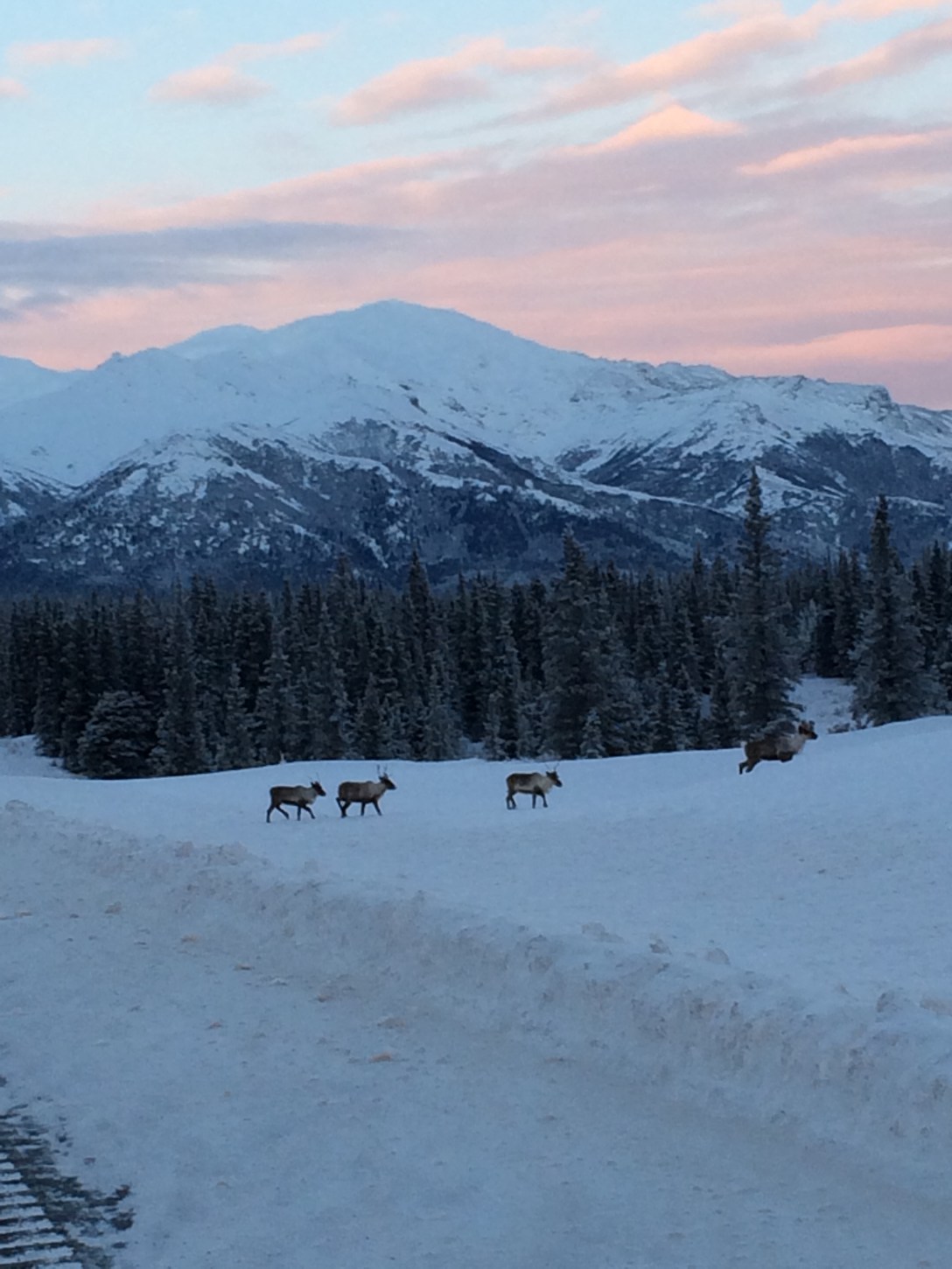
Yet he covers the distance, over and over, for reasons of his own.  For a paycheck, most likely.  Or, perhaps, to drive, unencumbered, into a world without edges. To cross the wide Yukon River and to think of its bearing as a major trail river of the north.  To see tors of granite, jutting rock formations caused by weather erosion over years, on an alpine tundra.  To encounter a herd of caribou as they slowly make their way across the road. To find oneself on a line that traces the Arctic circle, where the sun stays above the horizon for a day on the summer solstice, bathing its surroundings in light. Or to return to a truck stop, just shy of home, where the smile of a woman behind the counter tells him it was worth the journey.


Arctic Handyman

People in Alaska still surprise me. By now, having lived here for nineteen years, I felt I had encountered most types that venture so far north.  Rugged outdoors types, living in and out of the bush, still panning for gold or setting up traplines.  Native Alaskans, coming to Fairbanks for conventions and meetings, living in small settlements that can be reached only by boat or bush plane. New migrants, drawn by adventure and a new latitude, who either flee south after the first winter or stay a lifetime. A motley assortment.

Then I met Lyle.

He came to us one summer, looking for work.

“I can do most things,” he offered, standing just beyond the front door, dressed in Carhartt pants, boots, a flannel shirt.  Painting, gutter cleaning, pressure washing, tile regrouting, winter snow preparations. “Mostly, I like outdoor work.”

He had a manner of going off on tangents when he spoke, gesticulating wildly into the air when a topic arose that excited him. Often, he lost his train of thought. “What were we just talking about?” he would then ask, brow furrowed, until we directed him back to the conversation at hand.  We had to smile.

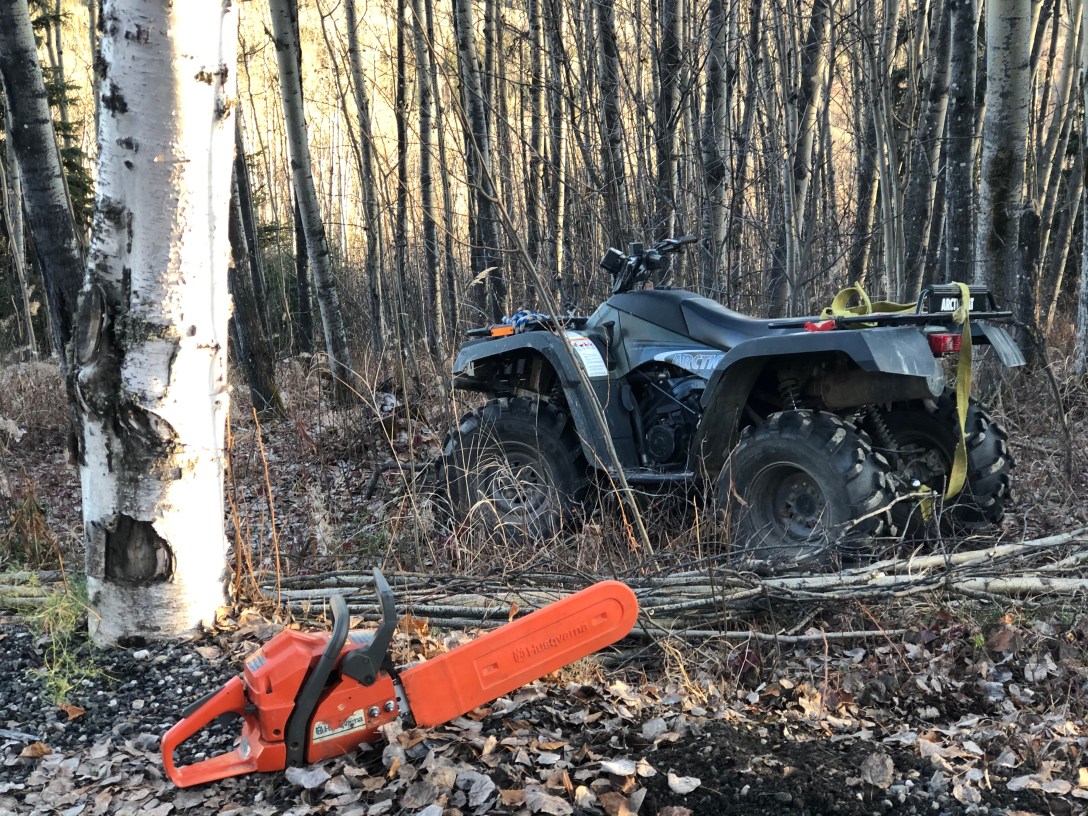
His work, a little unorthodox in manner of execution, was always eventually completed. When faced with the task of cutting the brome hay on the steep hillside behind the house, he tied a lawnmower to the hitch of his pick-up truck, levered the mower down the hill, and then ran the truck back and forth on the driveway above. When I asked him to help string up Christmas lights on the spruces outside, he came back with a long pole and hook which he circled, haphazardly, around the trees.  The end effect was what he called “natural-looking”.  He took me proudly one day to show me the cottonwood he had neatly sawed and stacked but was crestfallen when he learned he had piled them on top of my raspberry bushes.

Lyle’s tasks were always preceded by a text message.  They came to my phone, with no punctuation or regard to spelling and grammar:

“Hello how are you doing next day or two I’m going to try to make it up there for the breast removal.”  Breast removal?  He meant brush removal, I realized.

At times, we questioned whether he smoked pot, particularly when we thought we caught its scent one day from behind the woodshed.  Sometimes, we wondered if the job at hand would ever be completed.  Or whether he would ever return to pick up his equipment, rakes and sleds and gasoline containers, which he had deposited at the end of our yard. We shook our heads and asked ourselves why we kept him on.

One day, he brought me a decorative hummingbird, powered by a tiny solar panel, to hover and swivel over my peonies.  Another time, some interesting rocks that he lined the flower bed with.  He had a soft side for children and dogs, I noticed, when I heard his stories about taking his grandchildren to look at fossils etched into the red rocks near Healy. When Buddy, our older dog, was spooked by fireworks and ran away, causing us to frantically look for him in the middle of the night, Lyle came promptly the next morning to build him a safe dog enclosure.

What did I really know about him, I thought, except that he was trying to make a living, not only for himself, but also for an extended family. I learned he had lost his wife early, years ago, and was now helping his single daughter and her children stay afloat.  He shared his earnings with those needier than himself and found room in his heart to construct little gifts for me around the garden.  All of a sudden, it didn’t matter that the jobs were done sporadically, somewhat eccentrically.  Be kinder than necessary, the saying goes. I must remember to take an example from him.